Corporate governance
Good governance informs decisions and prepares for the future.
Good governance brings different views to bear, clarifies the trade-offs and holds a course. We analyse the balance of power, how decisions are made and the relationships between shareholders, the board and management. We help them evolve so as to clarify responsibilities, enrich debate and reconcile strategy, risk management and the company’s long-term future — consistent, where relevant, with the family project.

Governance that serves decisions
Do your governance bodies shed light on choices and allow the difficult calls to be made?
A shared project, relevant information and a genuine exchange of views are what good decisions rest on.
The way shareholders, the board and management work together must allow views to be stated, responsibilities to be clarified and the effects of decisions to be followed. Governance shows its full value in this ability to connect ambition, trade-offs and action.
A board shows its worth in its ability to question its own ways of working as much as its strategic assumptions, to assess risks and to recognise when the course has to change.
A board’s habits can become its blind spots: what is no longer discussed sometimes needs to be looked at again.
Four levers to strengthen your governance
Understanding where decisions are really made
We compare formal responsibilities with actual practice to identify implicit powers, blockages and blind spots, then define the priority adjustments.
Strengthening the board’s strategic contribution
We create the conditions for the board to step in at the right moment, test the assumptions and shed light on the trade-offs that commit the company’s future.
Clarifying responsibilities and interfaces
We define the roles of shareholders, the board, committees and management, and how they talk to one another, to resolve overlaps and areas nobody owns — taking family governance into account where relevant.
Embedding change in practice
We adapt delegations, rules and follow-up arrangements to the decisions to be taken, then help the people concerned make them their own.
Two focused engagements.
Board evaluation
Bringing several perspectives together to reveal blind spots, assess the contribution of the board as a whole and of each member, and identify priorities for improvement.
Explore board evaluationSeminars & training
Examining in depth the choices that commit the company, testing perspectives against one another and strengthening each person’s ability to fulfil their role.
Explore seminars & training
Governance shaped to the company’s own balance
Shareholders
Clarifying the shared project and the shareholders’ rights and responsibilities, then organising their dialogue with the board to reconcile their expectations, changes in the capital and the interest of the company.
See shareholder governanceFamily
Distinguishing family, shareholder and managerial legitimacy to prepare successions and preserve the ability to decide together.
See family governanceFounders & start-ups
Adjusting how power is shared as the company grows and investors come in, while preserving entrepreneurial drive and the quality of decisions.
See how we work with founders

An outside view to shed light on internal balances
We bring together the documents, the views of the people involved and the observation of governance bodies to show what helps or hinders how they work. The same pair stays with you from diagnosis to the implementation of the adjustments.
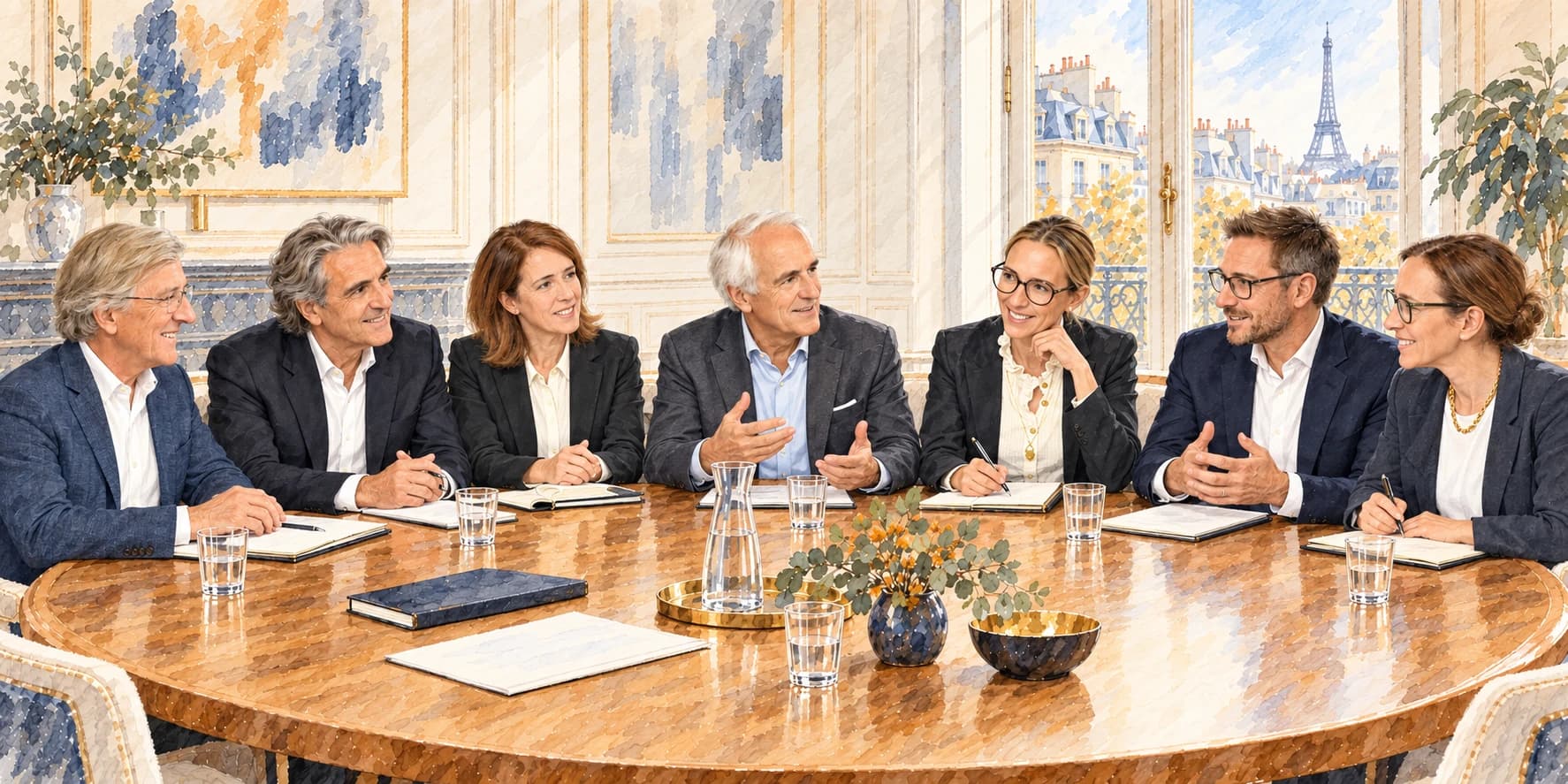
Why Associés en Gouvernance?
People above all. Nothing replaces lived experience.
The partners hold, or have held, board, committee and executive responsibilities. Their view of governance bodies is informed by how those bodies actually work. Most have also seen their own family’s business at close quarters.