Shareholder governance
Sharing ownership means making explicit the contract that binds the shareholders to one another.
Shareholders can share the same capital without sharing the same horizon, the same appetite for risk, the same expectations of liquidity or the same willingness to get involved. Shareholder governance allows those differences to be discussed before they turn into power struggles.

Shareholders means a bond based on ownership
Capital distributes rights. It also creates expectations, dependencies and responsibilities.
Shareholder governance organises how the owners of the capital are informed, are represented, take decisions, come in and go out, and manage their differences.
A percentage holding is not enough to determine who should get involved, who holds a blocking right, who needs liquidity, or what each shareholder expects of the board. These questions have to be made explicit for the capital to remain a framework for cooperation rather than a source of conflict.
A shareholders’ agreement is not enough to clarify a shareholder relationship. It only makes sense after shared reflection on the powers, the commitments and the situations to be anticipated.
Disagreement is not always the problem. What stays unspoken often is.
Four areas of work.
Define the shareholders’ project
Before drafting clauses, the shareholders need to be clear about what they want to make possible together: holding, growing, selling, passing on, opening up, diversifying, distributing or reinvesting.
We help identify what has to be shared (common convictions), what can remain individual (each person’s own expectations), and what does not require a lasting agreement — provided the rules of autonomy are clearly defined.
Organise the capital and how it changes
A capital structure has to remain compatible with the strategy, the financing needs, the succession plans and the expectations of liquidity. We work through the scenarios of entry, exit, dilution, sale or restructuring with the parties concerned.
The point is to preserve a capacity to act, not to freeze an obsolete balance.
Clarify rights, duties and protections
Majority, minority, information, veto, pre-emption, tag-along, exclusion or contribution commitments: all of these mechanisms redistribute power and change behaviour.
We help shareholders measure the concrete consequences of the rules, then check, with their legal advisers, that the drafting continues to serve their choices.
Connect the shareholders, the board and management
Shareholders set the framework, the board carries a collective responsibility, management runs the company. When these three levels are not properly connected, one invariably ends up taking over the role of another.
We clarify the reserved matters, and organise the flow of information, representation on the board and the moments of dialogue between the governance bodies.
When the ownership contract meets the other governance systems.
Family
In a family business, the contract between shareholders has to take account of their history, the different branches, the generations and the place each person means to take. It cannot be separated from the ties that bind them.
See family governanceCompany
How the capital is distributed shapes the composition of the board, the reserved matters, the relationship with management and the ability to decide.
See corporate governanceFounders & start-ups
For founders, every funding round, dilution or new investor changes the capital, the authority and the organisation at the same time.
See how we work with founders

How we work
The contract is worked out with the people before it is written between them.
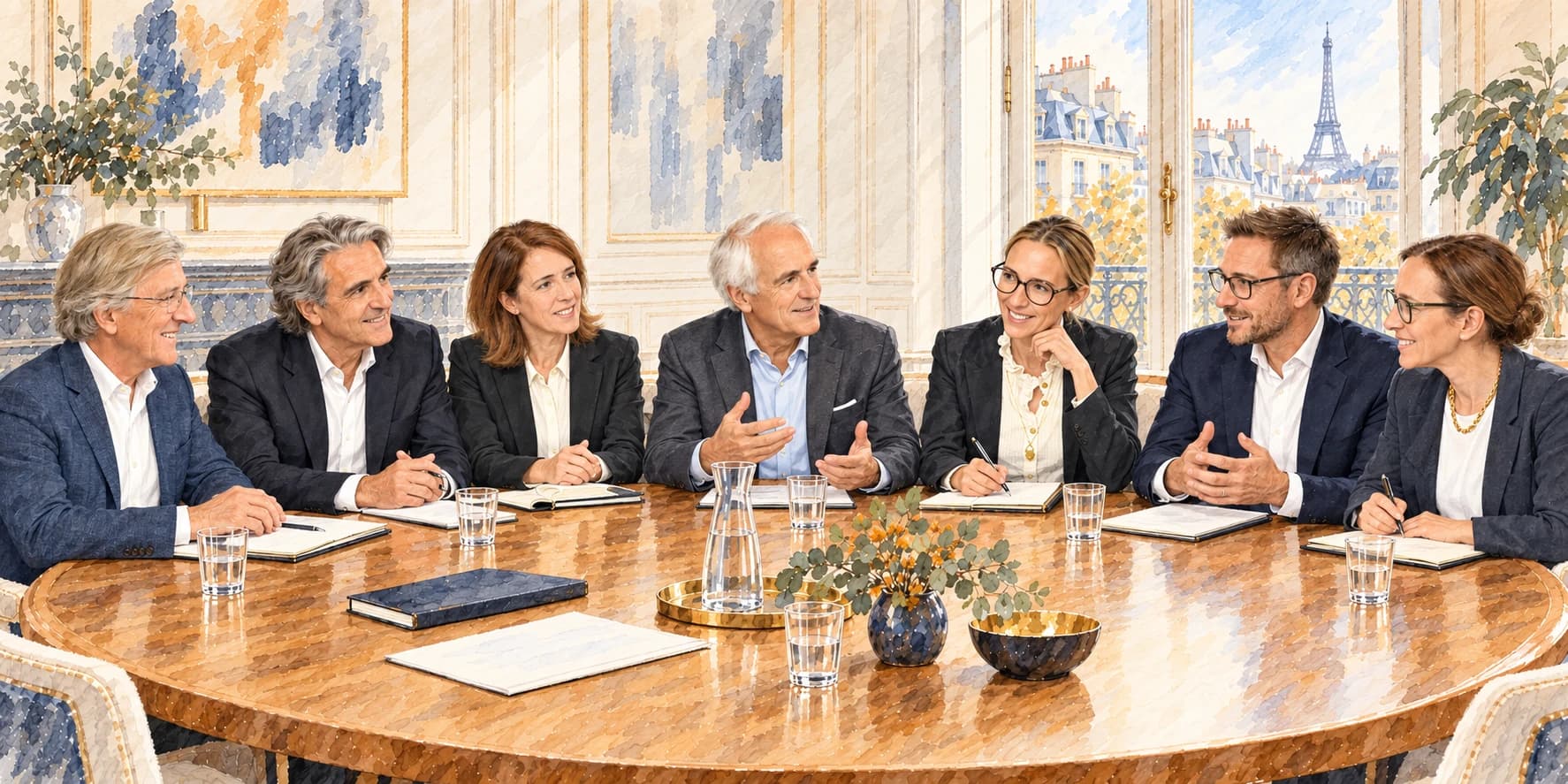
We combine individual interviews, sessions between shareholders, scenarios for the distribution of power, and work alongside the legal advisers. The documents come only once the decisions are mature enough to be formalised.
- Individually — bringing out each person’s expectations (control, liquidity, contribution, succession), which are sometimes hard to voice directly in front of the group.
- Collectively — putting the shareholders to work on the scenarios, the disagreements and the concrete consequences of their choices.
- In the documents — translating the decisions into the shareholders’ agreement, the articles of association, the rules and the arrangements for dialogue with the board.
Why Associés en Gouvernance?
People above all. Nothing replaces lived experience.
The pair brings together the relational, shareholder and entrepreneurial readings, to keep a balanced view of the engagement.